Understanding the Core Loop
At its heart, Dead by Daylight operates on a simple yet thrilling formula: 4 Survivors vs. 1 Killer, locked in an asymmetrical match of stealth, strategy, and horror. Survivors must repair five generators scattered across the map to power the exit gates, while the Killer hunts them down to sacrifice them to The Entity. This gameplay rhythm is often called the game’s core loop — an ongoing cycle of repair, escape, and repeat.
Survivors use third-person perspective, granting wider environmental awareness, while Killers play in first-person to enhance tension and accuracy. A key technical term is line-of-sight, which determines visibility between players and environmental objects.
Survivor Objectives:
- Repair 5 generators using skill checks
- Avoid detection using crouching and stealth routes
- Rescue teammates from hooks
- Open exit gates and escape
Killer Objectives:
- Patrol the map and track survivor movement
- Use aura reading perks to locate targets
- Down survivors with melee attacks
- Carry and hook survivors to progress sacrifices

The Perk System & Loadouts
The Perk System and Loadouts Every character in Dead by Daylight has access to perks, which function as customizable abilities that shape your playstyle. Perks are the cornerstone of every build, providing strategic advantages in tracking, stealth, healing, and more. Each character starts with unique perks that can be unlocked for others via the Bloodweb system. When creating a build, players can equip up to four perks once fully leveled. These perks range from basic survival skills to advanced effects that interact with game systems. For example:
- Dead Hard (Survivor): Dash forward to avoid a hit.
- Hex: Ruin (Killer): Automatically regresses unguarded generators.
- Borrowed Time: Grants rescued survivors endurance.
Steps to Create a Loadout
- Access the Loadout Menu before a match.
- Equip up to 4 perks and 1 item (Survivors) or add-ons (Killers).
- Confirm your build and ready up.
Technical Tip: Every perk has a tier level (I, II, III) that enhances its potency. Beginners should focus on synergy — choosing perks that support each other rather than stacking random effects.

The Bloodweb & Progression
Progression in Dead by Daylight revolves around the Bloodweb, a procedural skill tree that offers perks, items, and offerings. Each level of the Bloodweb contains interconnected nodes. Players spend Bloodpoints, earned through gameplay actions, to unlock these rewards. The system’s procedural nature means no two Bloodwebs are identical. As you level up a character, the Entity (the game’s AI overseer) consumes random nodes, forcing strategic decisions. It’s a resource management minigame where planning matters as much as luck.
Key Bloodweb Concepts:
- Bloodpoints: Currency used to purchase nodes.
- The Entity: Removes items from the Bloodweb over time.
- Prestige: Resets your character’s level for cosmetic rewards and enhanced perks.
Efficient Leveling Tips:
- Prioritize unlocking teachables (universal perks).
- Invest in offerings that boost Bloodpoints (e.g., Bloody Party Streamers).
- Balance between perk collection and add-on stockpiling.
By mastering the Bloodweb, you not only improve your characters but also unlock greater customization and flexibility across your roster.
Map Awareness & Environmental Strategy
The battlegrounds of Dead by Daylight are procedurally generated from tiles, making each trial slightly different. Yet, core structures — such as the Killer Shack, main building, and Jungle Gyms — remain consistent. Understanding these layouts is essential to mastering chase and escape tactics. Survivors use the environment to loop killers, a tactic involving tight turns and obstacles to break line-of-sight. Knowing how to utilize pallets and windows effectively can mean the difference between escape and capture.
Common Map Features:
- Killer Shack (always includes one safe window and pallet)
- Totem spawns (can be cleansed to remove hex effects)
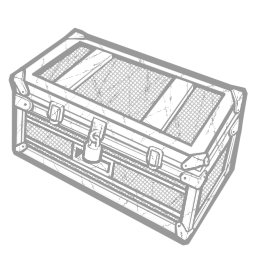
- Chests (contain items like med-kits or flashlights)
Spatial Awareness Checklist:
- Identify key map landmarks early.
- Track generator spawns by sound (generator hum radius).
- Use terrain height and fog density for stealth.
Each map has unique hazards — from cold fog in MacMillan Estate to cornfield obstructions in Coldwind Farm. Learn them like a survivalist charting a new world.
The Meta & Advanced Play
Once you’ve learned the basics, Dead by Daylight opens into a rich meta-game of prediction and psychology. High-level play revolves around mind games, map pressure, and perk synergy. Killers manipulate survivor behavior with deceptive movements, while survivors coordinate through unspoken teamwork and timing. In advanced matches, the interplay of cooldowns, map layouts, and perk rotations becomes crucial. For instance, combining Corrupt Intervention (to block generators) with Pop Goes the Weasel (to regress repairs) creates early-game dominance. Survivors counter with coordinated generator splits and looping efficiency.
Meta Concepts to Know:
- 3-gen lock: Controlling three close generators for map dominance.
- Snowball potential: Gaining momentum through chained downs.
- Exhaustion perks: Survivors’ sprint-based abilities with cooldowns.
Tips for Competitive Improvement:
- Analyze your chases using the in-game replay.
- Learn survivor loop tiles and how to mind-game them.
- Watch patch notes — even a 0.5s cooldown change can alter strategies.
Becoming a master of Dead by Daylight means balancing logic, instinct, and experience — surviving not just through speed, but through adaptation.